
Sravani Sarkar
NewsBits.in
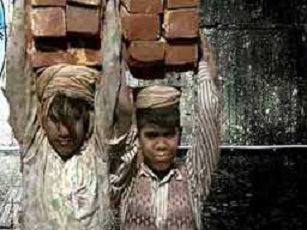
Bhopal: Golu, 11, has been working at a tea and snacks kiosk in MP Nagar (Bhopal) since last four years. For 12 hours of back breaking work every day, he gets a mere Rs 900 and some leftover snacks as food. The money is held back by the shopowner on Golu’s request, because his drunkard father forcibly takes the money away.
Golu’s mother died when he was a toddler and circumstances forced him to start work when normally children start their schooling. Naturally, Golu is totally illiterate and has turned a tobacco addict too.
More than 1 lakh (1, 01,334) full time child labourers like Golu in the age group of 7-14 years in Madhya Pradesh are totally illiterate while education another 1.75 lakh marginal child labourers (those who work for less than six months a year) is compromised, an analysis of 2011 census data by NGO Child Rights and You (CRY) has shown.
The analysis comes on the eve of World Day against Child Labour on June 12.
CRY analysis shows that there are in all 2, 86,310 full-time or main child labourers (who work for more than six months a year) in Madhya Pradesh, which means that at least one of three of them is illiterate (cannot read or write). Of the 4, 13,929 marginal labourers, education of 1, 75,727 is compromised, the data shows.
“35% child labourers in Madhta Pradesh are illiterate. This is a very unfortunate situation and if it does not change, they will remain trapped in the intergenerational cycle of poverty and unemployment,” says Soha Moitra, Regional Director- CRY
Nationally close to 1.4 million child labourers in India in the age group of 7-14 years cannot write their names, analysis of Census data by CRY- Child Rights and You further reveals.
A CRY statement said that India’s legal framework which is based on the assumption that children can work and still be educated is worsening the situation. The current figures for literacy amongst child labourers clearly do not go in favour of this argument. Almost 30 years since the Child Labour Law came into force, India has the opportunity to ban all form of child labour. But the new law also allows children in this age group to work in family occupations after school hours.
The Census 2011 data for children in labour, states that 6.5 million children in India (64.1% of child labourers) in the age group of 5 to 14 years work in agriculture and household industries. CRY’s on ground experience reveals that a large number of children engaged in these occupations are working with their families, thus exempting them from the proposed ban.
Soha further adds, “Children working within the family set up will be working for significantly longer hours and alongside their school. This can put physical and mental pressure on the child which in turn might hamper his attendance ultimately leading to lesser attendance. With less play time and social bonding after school the child may be forced to drop out of school. The provision to allow children below 14 years to engage in home based work therefore denies them equal opportunity to education and overall development”.