
Sravani Sarkar
NewsBits.in
Bhopal: Despite the free childbirth scheme – Janani Suraksha Yojana (JSY) being in place for over a decade, even poorest of families in Madhya Pradesh have to shell out on average Rs 1387 for childbirth in a health institution.
The amount increases to average of Rs 1746 in rural areas – crushing the cash-strapped families. This has come to light in the recently released report of National Family Health Survey (NFHS)-4.
This entire ‘out of pocket expenditure’ (OOPE) is incurred by the way of tips to health and paramedical staff, private transport when Janani Express (government maternity vehicle) fails to arrive, food and drugs during hospital stay.
This entire cost is avoidable if government system works properly and thus ‘illegal’. OOPE for childbirth is thus pushing back the agenda of safe motherhood to a large extent, experts and activists working for safe motherhood and accessible health services feel.
An analysis of the NFHS-4 by Arti Parashar of NGO Vikas Samvad in context of OOPE and JSY shows a clear correlation between poor JSY implementation and high OOPE.
For example, in Katni district, the reach of JSY is only 49% while average OOPE is as high as Rs 4229. In Satna with 67% JSY reach, the OOPE is Rs 3568 while in Tikamgarh the OOPE is Rs 2274 for JSY reach of 51.1%.
In contrast, in Morena district with 75.3% JSY reach, the OOPE is only Rs 566 while in Dindori it is Rs 582 for 73.9% JSY reach. Overall for MP, the JSY reach is 61.1% for the average OOPE of Rs 1387.
At national level in states like Manipur, the OOPE is as high as Rs 10,076 as the JSY reach is pathetic 26.2% and for West Bengal it is Rs 7782 as the JSY reach is only 28.7%.
JSY not only provides for completely free hospitalization, transport, stay, health care, medicine and food for the mother and newborn in a government or accredited private institution, but also has provision for cash assistance of Rs 1000 in urban and Rs 1400 in rural areas. This is so that the health of mother and child is not compromised, Arti, who analysed the data and ground situation, said.
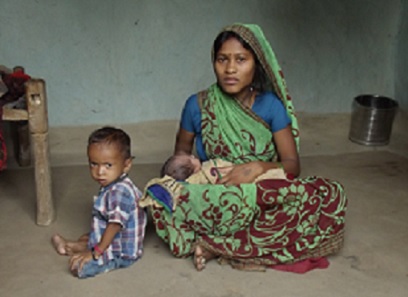
However, due to several loopholes in the system, families incur numerous avoidable expenses as mentioned above. For example, Sunita Yadav of village Jhaknaud is Pohri block of Shivpuri district incurred expenditure of Rs 1570 when she gabe bith to a child in January this year.
This included Rs 400 (to and from hospital) as Janani Express failed to arrive, Rs 655 on food, Rs 5 as registration cost, Rs 380 as tips to nurse, washer man and sanitary staff, Rs 30 for soap and detergent and Rs 100 for clothes of child (which should also be provided by the hospital).
“Such high expenses deter poor people from seeking government health facilities. It is no more a matter of access as high institutional deliveries indicate, but the lack of facilities mainly health staff in the facilities and the consequent inhumane behavior with the people who approach. This needs to be taken care of at priority,” Sachin Jain of Vikas Samvad said.
Photo Courtesy: Rakesh Malviya