
Special Correspondent
NewsBits.in
Bhopal: Upped by its successful pilot project, the MP government has decided to extend its menstrual hygiene programme under project Udita to all 92,000-odd anganwadis and mini-anganwadis in state shortly.
Under the programme, anganwadi workers would be disseminating information and counseling adolescent girls on safe and healthy menstrual hygiene management. Also they would be stocking sanitary pads that could be purchased at three for Rs 10.
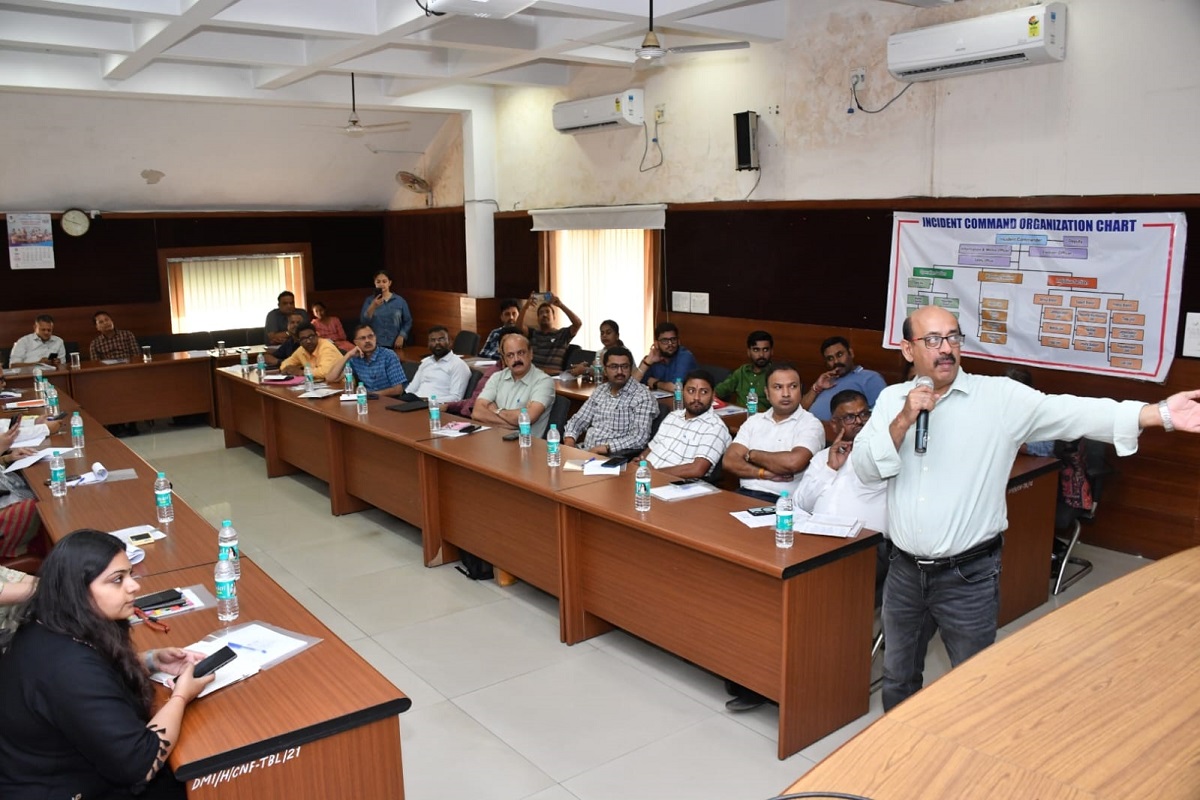
The initiative is supported by WaterAid India and implemented by the state directorate of integrated child development scheme (ICDS). The announcement came during a programme organized to mark Menstrual Hygiene Day on May 28.
Commissioner ICDS Pushpalata Singh told NewsBits.in that currently, project Udita is implemented at 40,100 anganwadis and apart from creating awareness and counseling the girls, the anganwadi workers are also managing to sell the good quality sanitary pads that are important for menstrual hygiene.
“They are taking keen interest in the work and also we pay them some encouragement amount, so we are hopeful that the programme could be extended to all anganwadis in state soon,” the commissioner said. The State has 80,160 anganwadis and 12,070 mini anganwadis.
Speaking at the programme, the principal secretary of women and child development, JN Kansotiya said “It is important to talk about the taboos surrounding menstruation. Girls and women need to be made aware so that they can manage their menstruation safely and hygienically. The Udita Project should become a movement of change and ensure that no woman or girl in the state or the country is ignorant of menstruation.
WaterAid India that is supporting the programme through capacity building of anganwadi workers shared an interesting animation video created to spread awareness on the issue of menstrual hygiene. (Link: https://www.youtube.com/watch?v=xuT333cesYc)
Avinash Kumar, Director of Programmes & Policy at WaterAid India said “Providing a girl or women with the facilities to manage her period in a healthy way upholds her dignity. Information is critical. A girl needs to know why she has periods and what is happening to her body when she menstruates. She needs to be aware about the range of safe and hygienic menstrual absorbents available. Adequate water, sanitation, and hygiene (WASH) facilities (including disposal systems), are required to manage periods safely and privately.”
Menstruation in India has traditionally been associated with taboos and the statistics are stark and dismal:
88% of girls and women who menstruate use unsafe materials 66% of girls are unware of menstruation before their first period 70% mothers think periods are dirty 66% girls and women manage their periods without toilets 60% of girls in India change their menstrual absorbent only once a day Cervical cancer kills around 72,000 women in India every year, more than 26% of the deaths worldwide