
Sravani Sarkar
NewsBits.in
Bhopal: Madhya Pradesh has made it to the global forum, but for a negative reason.
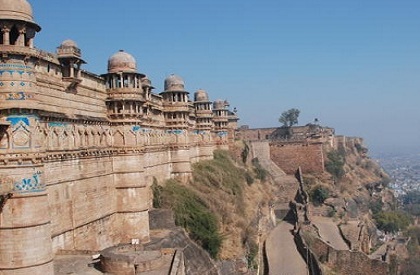
Gwalior – one of the four major cities of the state has been listed as second most polluted cities in world as far as ambient air quality goes according to a World Health Organisation (WHO) report released on Thursday.
The city, mainly known for its historical past, has notched a shockingly high annual mean fine particulate matter (PM 2.5) level of 176 micrograms per cubic metres µg/cum). The normal WHO guideline value for PM2.5 being 10 µg/cum, Gwalior’s air is 17 times more polluted than it should be.
In 2014 WHO report, Gwalior was positioned as the third most polluted city in world with PM2.5 of 144. This means during the intervening period, air pollution in Gwalior went up significantly by 22%.
High annual mean of fine particulate matter in air means added risk of diseases like stroke, heart disease, lung cancer, and both chronic and acute respiratory diseases, including asthma.
Pollution control authorities in Gwalior and MP had previously blamed the poor air quality on increased construction work near monitoring points as well as increase in vehicular traffic. They had talked of continuous monitoring of air to check the issue.
Interestingly, Delhi, that has been listed as most polluted city in the world in the 2014 report of WHO has significantly improved its position and is now placed at 11th rank in the list of most polluted cities in the world. The pollution level here has reduced by 20%, an analysis by the Centre for Science and Environment (CSE), New Delhi said.
Zabol in Iran with PM2.5 of 217 µg/cum is the most polluted city globally. The WHO monitored the air quality of 3000 cities in 103 countries for its latest report.
Four Indian cities are in top ten most polluted cities list. Allahabad with PM2.5 of 170 is placed third in world, Patna and Raipur with 149 and 144 are placed at sixth and seventh places respectively. The succor is that in 2014 report, there were six Indian cities in the top ten of the list. Apart from Delhi, Ahmedabad and Lucknow have managed to improve their position, while Allahabad is a new entrant on the disreputable list.
The CSE analysis of the WHO report shows that pollution levels in several other Indian cities have worsened. Along with Gwalior, cities like Patna, Allahabad and Kanpur have become more polluted. Anumita Roychowdhury, CSE’s executive director for research and advocacy and the head of its air pollution control unit said in a media release: “This indicates air pollution is now a national crisis and needs strict and aggressive nation-wide action across all cities of India.”