
Special Correspondent
Newsbits.in
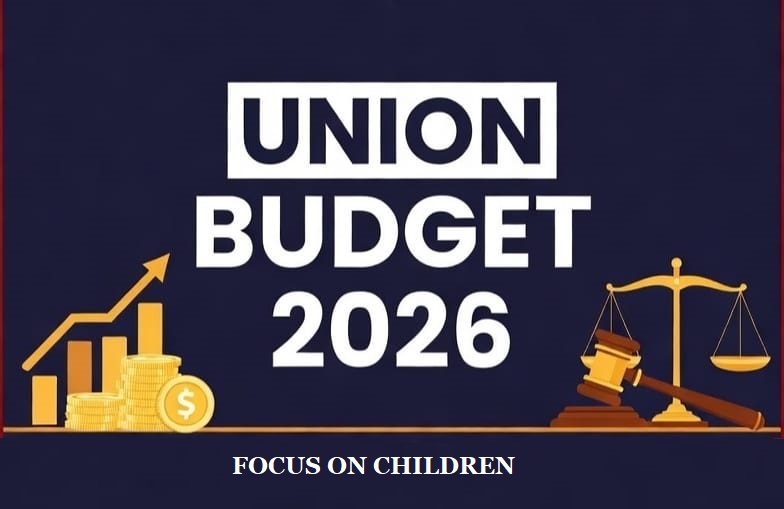
NEW DELHI: The Union Budget 2026-27 reflects a modest but notable uptick in allocations for children, signalling incremental progress rather than a transformative shift in fiscal prioritisation.
A quick analysis of the Expenditure Budget Statement No. 12 done by CRY – Child Rights and You - shows that total child-related allocations have risen to Rs 1,32,296.85 crore in 2026–27 (BE), up from Rs 1,16,132.5 crore in 2025-26 (BE), registering an absolute increase of Rs 16,164.35 crore.
Compared to the previous Budget (25-26), the share of the Child Budget in the overall Union Budget 26-27 has increased from 2.29 per cent to 2.47 per cent, while allocations as a percentage of GDP have increased marginally from 0.33 per cent to 0.34 per cent.
Puja Marwaha, CEO, CRY – Child Rights and You said, “While this signals positive intent, the overall scale of investment remains limited when viewed against India’s demographic realities and the growing developmental needs of children."
"Incremental increases in health, nutrition and education are welcome, but achieving inclusive and sustainable growth will require sharper prioritisation of children, with stronger and more equitable investments that go beyond marginal year-on-year gains.”
Child health and nutrition
The allocations for the Flexible Pool for Reproductive and Child Health (RCH), Health System Strengthening, National Health Programme and National Urban Health Mission have increased by Rs 261.15 crore to Rs 4,591.58 crore. Saksham Anganwadi and Poshan 2.0 has seen a welcome 5.19 per cent rise, with allocations increasing by Rs 969 crore to Rs 19,635 crore.
The Poshan 2.0 programme is the government’s flagship nutrition initiative aimed at addressing malnutrition among children, adolescent girls, and pregnant and lactating women through supplementary nutrition interventions, and the increase could support wider coverage and more consistent delivery of nutrition services at the Anganwadi level.
The PM Poshan Shakti Nirman scheme has received a 2 per cent increase, rising to Rs 12,749.99 crore. Significantly, the Jal Jeevan Mission has been reintroduced into the Child Budget after FY 2024-25, with an allocation of Rs 6,736.36 crore, underscoring the centrality of safe drinking water to child health outcomes.
Child development, education and protection
Mission Vatsalya has seen a marginal increase of 3.33 per cent, reaching Rs1,550 crore. Samagra Shiksha Abhiyan has been allocated Rs42,100 crore, a 2.06 per cent rise over the previous year.
Encouragingly, allocations for Eklavya Model Residential Schools have increased sharply by over 20 per cent to Rs7,200 crore, reflecting a stronger focus on educational access for tribal children. Navodaya Vidyalayas and Kendriya Vidyalayas have also received higher allocations.
The substantial allocation of Rs3,200 crore for Atal Tinkering Labs in 2026-27 signals renewed emphasis on innovation and scientific temper in government schools, while the inclusion of the Skill India Programme in the Child Budget aligns with the National Education Policy’s vision of integrating vocational education early.
However, several scholarship schemes for children from marginalised communities remain largely stagnant. Allocations for pre- and post-matric scholarships for Scheduled Castes have seen no increase, while scholarships for OBCs, EBCs, DNTs and children with disabilities have registered only marginal rises.
While the Programme for Development of Scheduled Tribes [PM Vanbandhu Kalyan Yojana] has seen a substantial increase, the overall picture suggests uneven attention to equity-focused interventions.
Taken together, the Child Budget 2026-27 reflects incremental gains rather than transformative investment. For India to advance on a path of inclusive and sustainable growth, future budgets must move beyond marginal increases and place children more firmly at the centre of fiscal planning, backed by scale, equity and long-term vision.