
Shams Ur Rehman Alavi
NewsBits.in
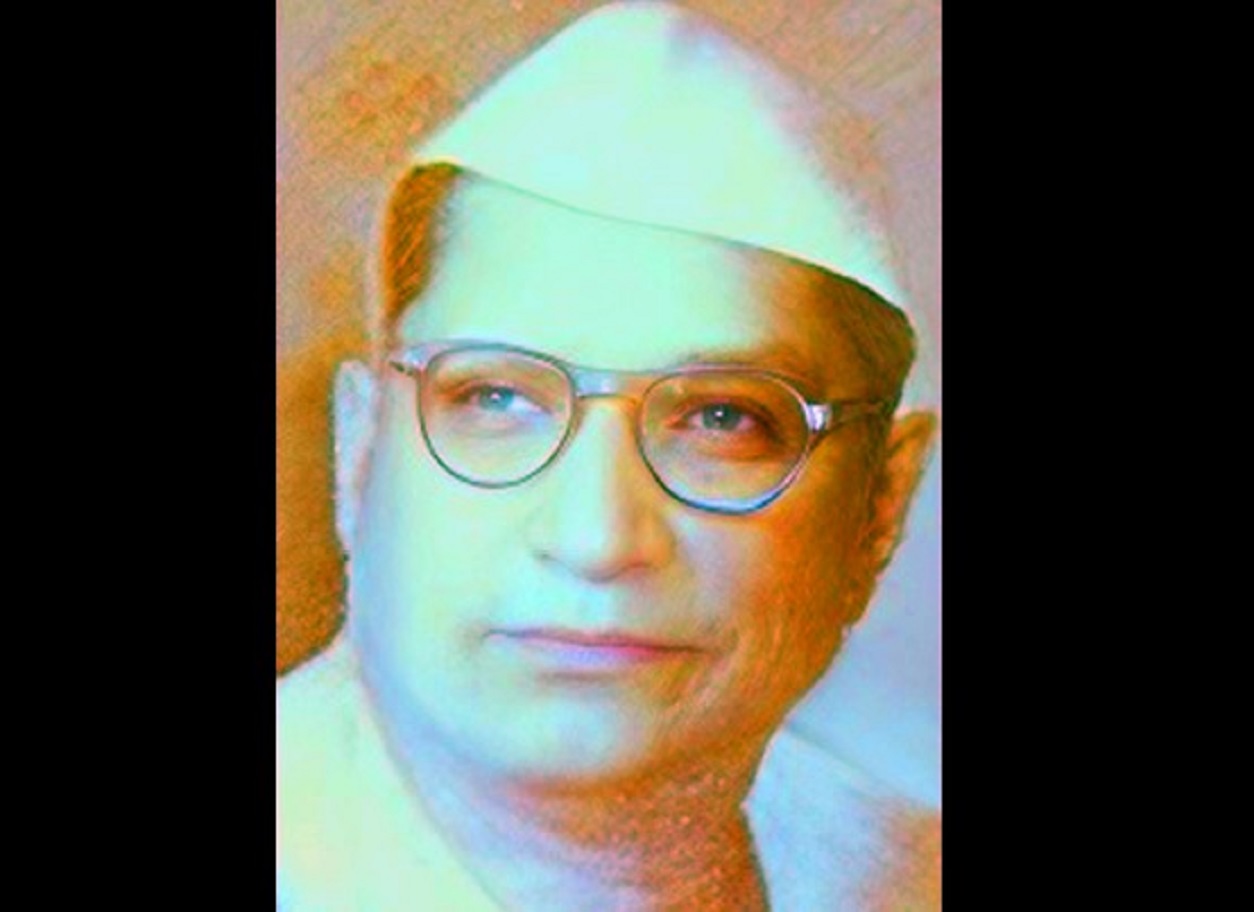
Abdul Qaiyum Ansari was a freedom fighter and a leader of masses who was known for his indefatigable energy and the passion to fight for the rights of the common man.
Ansari, who was born in Shahabad district (now Rohtas) in Bihar, joined freedom struggle at an early age. He was a teenager when he threw himself into the national movement. He responded to the call of non-cooperation with the imperial British government.
Due to the call for boycott of government institutions, he went about building a nationalist school in his hometown.
Ansari was arrested and when he came out of the prison, he was even more fervent in his desire to fight for the cause of freedom. He had attended the all parties’ convention as well as Congress’ session in Kolkata. Subsequently, he took to streets to protest against the Simon Commission and also faced police brutality.
Seeing the condition of poor in rural Bihar, he focused his attention on social and economic issues, especially, organizing people for the uplift of marginalized communities in the state.
When the Muslim League became a political force, Ansari was among the leaders who took a strong stand against the politics of religious divide. He opposed the demand for partition on communal lines and emerged as one of the most vocal leaders against it.He was leader who saw that the real issues needed to be tackled, instead of emotive and divisive agenda.
Working on the ground for long, Ansari had seen the condition of the poor belonging to all sections of the society and he sensed that a socio-economic uplift was needed, apart from education and focus on development, rather than turning the society towards differences on the basis of religion.
As a major leader from Bihar, he had also set up the All India Momin Conference that aimed at bringing the focus on real issues of the communities.The plight of laborers, weavers, workers and other artisans needed solution, when India was fighting the colonial rule.
In the elections, he contested and won. Six candidates of Momin Conference were elected from Bihar. They had opposed the league and also showed that Muslims of Bihar had not given the sort of foothold that the league’s leaders had hoped for in the state. After independence, he continued to fight for the cause of the under privileged.
Ansari was elected to the Bihar Assembly, repeatedly. In fact, he remained in the cabinet for 17 years and all his life, he remained active, working on the ground and ready to rush to any spot to redress a grievance. Later, he was elected to the Upper House of the Parliament. The true son of soil was indeed a leader of masses.
He edited Al Islah and Masawat, two Urdu publications. Ansari was lovingly termed as ‘Fakhr E Qaum’ Abdul Qaiyyum Ansari. He was born in 1905 when Bihar was still a part of Bengal. His life was about serving people and was committed to social justice. Upon hearing that a canal got damaged, he rushed to the spot, where he suffered cardiac arrest & passed away.
The year was 1973. Due to his dedication, lifelong struggle and vision for a strong & united India, Ansari was loved and is remembered for his services to the nation. A postal stamp was also released in his memory. His place is firmly secured among the stalwarts who selflessly served the country.